
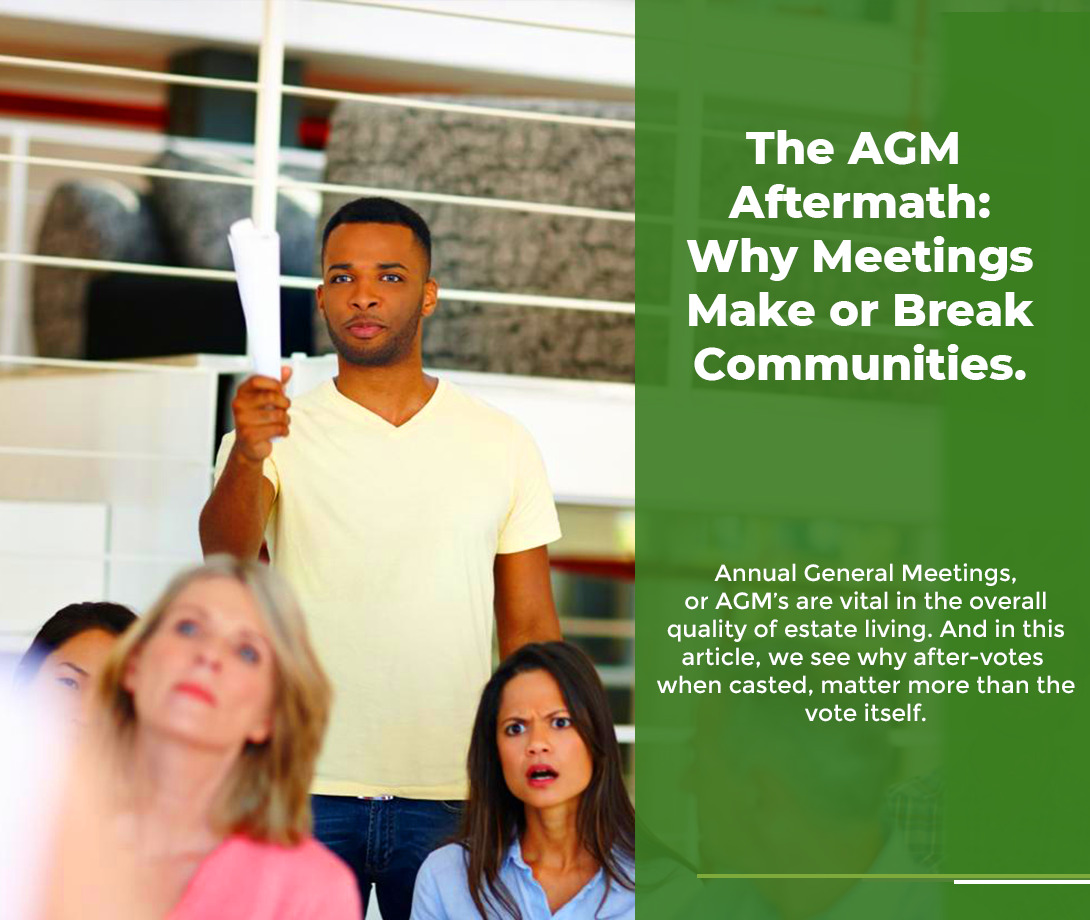
Why what happens after the vote matters more than the vote itself
CSOSlive Digest
The Story: The Meeting That Changed Everything
At Cedar Grove Estate, the AGM started late.
People shuffled in with tight faces and long sighs.
Budgets were low, repairs were overdue, and many owners still owed levies.
Numbers were presented.
Voices got louder.
A trustee accused the managing agent of doing a bad job.
Then came the big moment:
“We move to replace the board.”
Just before 11 p.m., the meeting ended, chairs scraped, and doors slammed shut.
Most people thought the drama was over.
But the real problem began the next day.
WhatsApp groups exploded.
The old trustees refused to hand over documents.
The new trustees claimed they were being sabotaged.
Contractors went unpaid.
Residents were confused about who was in charge.
Within weeks, the mess landed at the Community Schemes Ombud Service (CSOS).
“Our AGM was supposed to bring us together,” one owner wrote,
“but it tore our community apart.”
The Case at CSOS: When Procedure Becomes Power
Case Reference: CSOS/CT/1456/25 (fictionalised composite)
The Complaint
The newly elected trustees said the old board refused to hand over passwords, bank access, and documents. The estate could not function.
The Defence
The outgoing trustees argued that the AGM was invalid because
- notice periods were too short
- proxies were mishandled
They claimed the election had “technical flaws.”
The Ruling
CSOS upheld the election, stating it was properly constituted and quorate.
Then the adjudicator scolded both groups for acting like enemies instead of leaders:
“Trusteeship is not a trophy. It is a trust. How you hand it over shows your maturity.”
CSOS Orders
- Immediate transfer of all records and access details to the new board.
- A 90-day governance handover plan, with mediation guided by the managing agent.
- Mandatory training for trustees on fiduciary duties under the STSMA and the CSOS Code of Conduct.
The Human Side: The Meeting That Never Ends
An AGM is not just a meeting.
It is a mirror.
It shows whether people want to work together or fight to win.
For owners, AGMs are the only day they feel heard, so hidden frustration spills out.
For trustees, it’s the one day they feel judged for months of hard work that no one sees.
What sticks in people’s minds afterward isn’t the budget or the minutes.
It’s the feelings.
Who shouted.
Who rolled their eyes.
Who was rude.
Who didn’t show up.
Sociologists call this “post-meeting emotional residue.”
It decides whether people cooperate or quietly rebel.
A CSOS mediator said:
“You can’t govern people you humiliate at an AGM.”
Respect lasts longer than authority.
Lessons from the CSOS Ruling
| Lesson | Meaning |
| 1. Procedure Protects Legitimacy | If notice and minutes are correct, the election stands. |
| 2. Handover Is Part of Leadership | Trustees must transfer everything smoothly and fully. |
| 3. Emotions Outlive Elections | The tone of a meeting shapes future teamwork. |
| 4. Fiduciary Duty Includes Behaviour | Trustees must act professionally, not personally. |
Why AGMs Fail — The Bigger Picture
| Issue | Frequency (CSOS 2024 Data) | Cause |
| Quorum Failure | 31% | Apathy or poor notice |
| Election Disputes | 27% | Proxy confusion & unclear rules |
| Financial Non-Approval | 22% | Late audits or weak communication |
| Record Retention Issues | 12% | Trustees not handing over |
| Behavioural Misconduct | 8% | Personal attacks, disrespect |
Expert Insight:
“Most AGMs don’t fail because of numbers.
They fail because of stories.
If people don’t trust the process, the outcome doesn’t matter.”
What This Means for You
Trustees
- Treat the AGM as a governance ritual, not a checklist.
- Prepare a clear transition plan for handovers.
- Use neutral facilitators to keep meetings calm and fair.
Owners
- Attend with curiosity, not attack.
- Choose trustees based on transparency and teamwork, not personality.
- Ask for documents in advance — don’t ambush leaders at the meeting.
Managing Agents
- Provide clear AGM packs: agenda, summary financials, and FAQs.
- Record resolutions and lodge them with CSOS.
- Guide new trustees through the first 90 days — the most fragile period.
Final Reflection: Meetings Are Mirrors
An AGM reflects who we are as a community.
Not how well we vote… but how well we listen and hand over power.
Good communities aren’t those without conflict.
They are the ones where conflict becomes conversation.
“Governance is not about who wins the meeting.
It’s about who keeps the community standing afterward.”
A successful AGM doesn’t end with applause.
It begins with accountability and respect.
CSOS Digest Takeaway
| Principle | Description |
| 1. Transparency | Clear agendas and recorded resolutions build trust. |
| 2. Governance | Smooth handovers protect the community, not trustees. |
| 3. Empathy | Disagreement is democracy — not disrespect. |
| 4. Dialogue | Good AGMs start long before they are called to order. |